Gliding Across Oceans Without Flapping: The Physics of the Wandering Albatross
Spanning over three meters from wingtip to wingtip, the wandering albatross rides ocean wind shear for thousands of kilometers with barely a wingbeat.
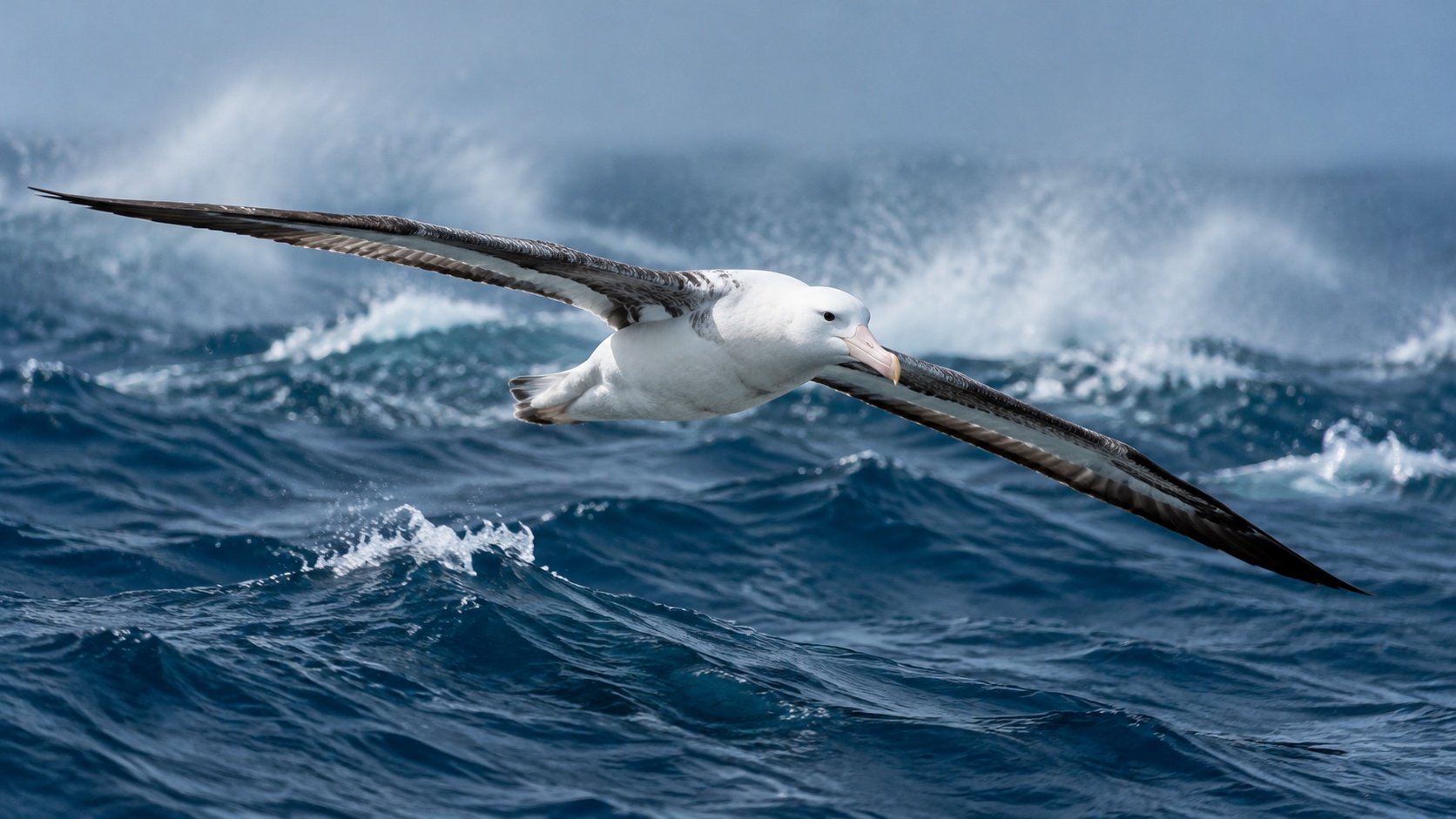
Dynamic Soaring Over Open Swells
Friction with rolling waves slows air right above the ocean surface, while wind just ten to fifteen meters higher moves much faster. The wandering albatross exploits this vertical wind gradient through a repeating S-curve maneuver called dynamic soaring.
By climbing into the headwind, turning at the crest to catch the faster tailwind, and diving back toward the trough, the bird harvests energy from the wind itself—covering hundreds of kilometers in a single day while spending almost the same energy as resting on a nest.
A Built-In Shoulder Lock
Holding wings spanning up to 3.5 meters outstretched for hours would exhaust ordinary flight muscles. Albatrosses possess a specialized tendon sheet in their shoulders that locks their wings fully open in midair, letting them glide effortlessly with relaxed muscles.
Years at Sea Before Touching Land
After fledging from sub-Antarctic islands, a young wandering albatross may spend five to seven continuous years at sea, sleeping on the water and foraging for squid across the Southern Ocean before returning to its birthplace to breed.
Related posts
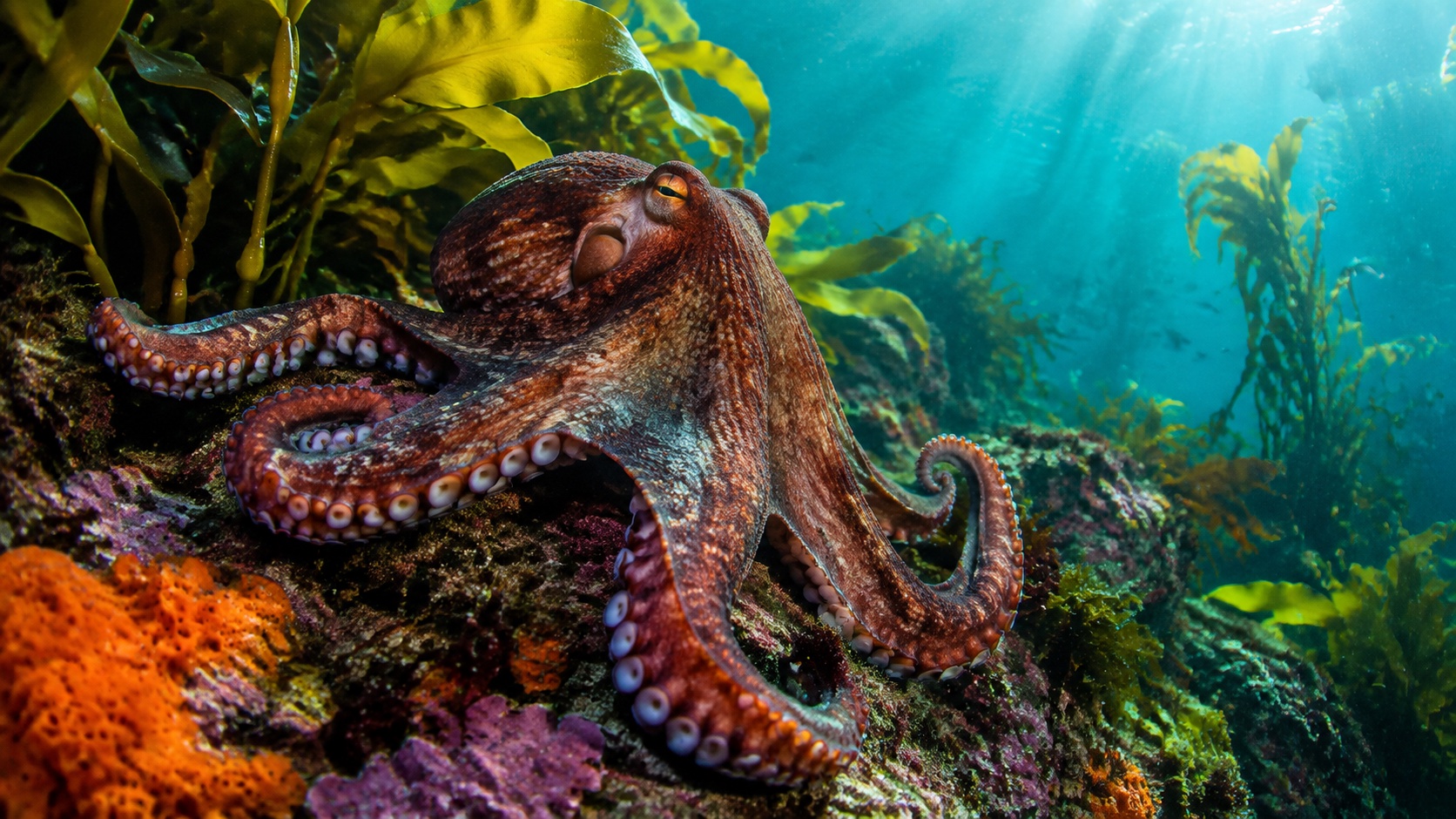
The Three-Hearted Architect: How Octopuses Solve Puzzles and Edit Their Own RNA
With three hearts, blue copper-based blood, and neurons distributed through every arm, octopuses rewrite biology's playbook for intelligence.